Specify the week before the surface
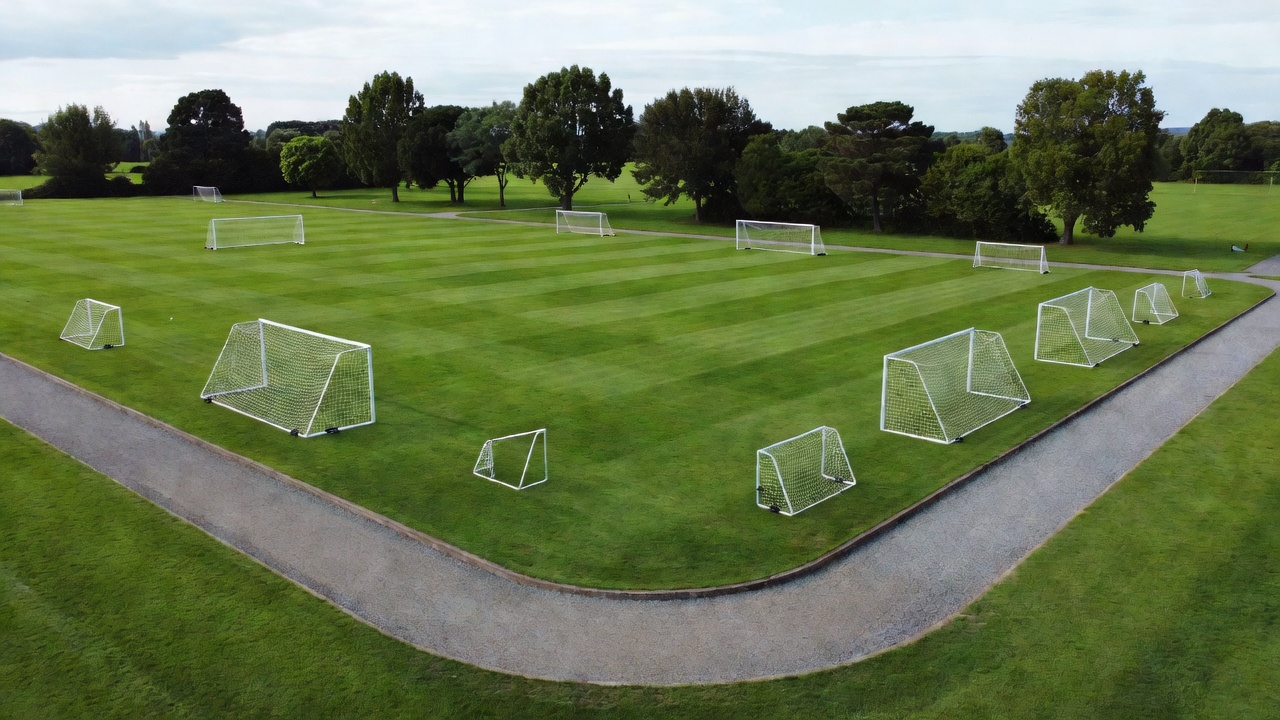
Begin with the training programme: age groups, squad sizes, concurrent sessions, individual work and any community use. Distinguish full-pitch activities from small-sided exercises and goalkeeper practice. A plan with several full-size rectangles may still lack the right spaces for the actual programme. Conversely, intelligently positioned smaller areas can reduce pressure on the main pitches without pretending to replace them.
Plot use across a typical week and a difficult winter week. Natural turf needs recovery and maintenance windows; synthetic surfaces also require inspection, cleaning and planned intervention. Neither should be treated as permanently available. Include the time spent moving goals, setting out equipment and restoring the surface after concentrated drills.
Capacity is therefore an operational assessment, not a universal number of hours. Ask a qualified sports-turf specialist to connect the proposed intensity of use with local climate, soil, construction and maintenance resources. The resulting recommendation should state its assumptions clearly enough for the operator to challenge them.
Read the ground beneath the lines
Topography, geology and water determine much of the pitch brief. Commission appropriate surveys and investigations before fixing finished levels. A flat-looking field may contain variable ground, historic drains or services that change the cost and feasibility of construction. Balance cut and fill with accessible routes, flood risk and the relationship to neighbouring land.
Drainage is not merely a pipe detail beneath the surface. Establish where water can lawfully discharge, what attenuation is needed and how maintenance access will be retained. Consider irrigation demand, water storage and the quality of available supplies alongside drainage. Local permissions and environmental constraints can shape the design as strongly as sporting requirements.
At the pitch edge, allow for safe run-off, fences, gates, storage and movement. Dimensions and clearances must be checked against the relevant competition, age-group and surface requirements. The Laws of the Game published by The IFAB are a starting reference for football geometry, not a complete academy infrastructure specification.
Choose a surface with an operator
Natural turf, reinforced natural systems and synthetic turf solve different problems. Natural turf depends heavily on growing conditions and care. Reinforcement may improve resilience in a specified system, but does not remove biological limits. Synthetic turf can support a different usage pattern, yet introduces its own maintenance, heat, drainage, material and end-of-life questions.
Compare whole-life responsibilities rather than a single installation price. Ask who will brush, aerate, test, repair and eventually replace each system, and where machinery and consumables will be kept. A high specification without a funded maintenance plan is not a robust specification. Equipment access must be designed at the same time as the pitch, including turning space and gates suited to the intended machinery.
Where a certification programme applies, confirm its current requirements with the relevant governing body and accredited testing provider. FIFA's Quality Programme for Football Turf and EN 15330-1 can inform discussions about synthetic surfaces, but mentioning a standard does not establish that a particular installation complies. Site-specific assessment and testing remain necessary.
Make the edges work harder
Pitch-side infrastructure shapes the quality of the day. Provide routes that remain legible in rain and darkness, with accessible viewing and shelter where appropriate. Separate regular pedestrian movement from machinery operations. Position equipment storage close enough to be used consistently, but outside required safety zones and without creating concealed corners.
Lighting deserves coordinated assessment of training needs, neighbouring homes, ecology and planning conditions. Column locations, glare control and maintenance access affect the whole campus. A lighting specialist should assess the intended activities and the applicable guidance, including relevant provisions of BS EN 12193. Do not select fittings from a visual rendering alone.
Finally, consider the view from the education room and the staff office, not just from the touchline. Useful oversight can support operations, while uncontrolled lighting or evening noise can undermine quiet work. The training ground should connect to the building without dominating every room within it. Plan a post-occupancy review with grounds staff and coaches: worn routes and frequently moved equipment often identify the next small improvement more reliably than a new masterplan.
Two material conversations
Living surface
Natural & reinforced turf
Discuss growth, seasonal recovery, irrigation and maintenance capacity. Reinforcement changes a system's behaviour; it does not eliminate the need to manage living grass.
Manufactured surface
Synthetic turf
Discuss the full tested system, routine care, temperature, drainage, material containment and replacement. Avoid comparing products solely by appearance or headline usage claims.